



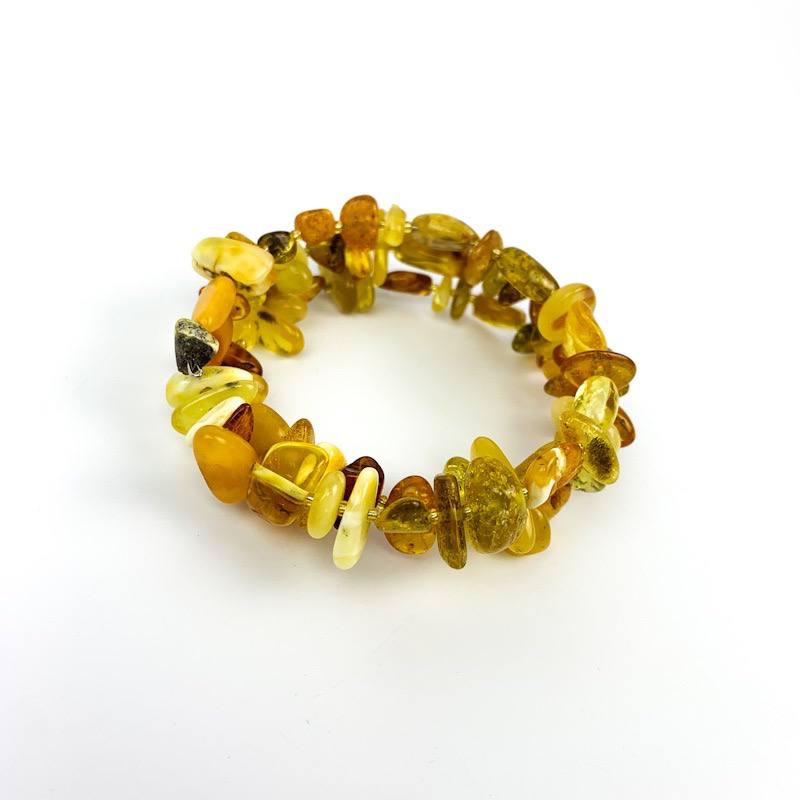
Ask someone to picture amber and they'll picture one color: honey-gold. Walk into our workshop and you'll see a tray with a dozen shades in it, none of them identical, none of them dyed.
Where the color comes from
Color in Baltic amber comes from the resin's original composition and from millions of years of pressure and oxidation — not from treatment. Tiny air bubbles scatter light and push a piece toward pale lemon or bone-white cloudiness; fewer bubbles and more oxidation push it toward deep cognac and cherry-red. Green and blue amber, rarer and prized by collectors, get their tone from UV fluorescence in the resin itself.
The main shades, and what suits what
Honey and cognac are the most versatile — warm enough for everyday wear, classic enough for gifting. Lemon and champagne tones read lighter and more modern, good against silver. Cherry amber, nearly opaque and deep red-brown, is the boldest choice and the one that photographs best in a statement ring. Butterscotch, cloudy and pale, is the most traditional Baltic color and the hardest to fake convincingly.
A field guide to amber colors
- Honey. The classic — warm, transparent gold, like sunlight through tea. The most recognizable amber and the heart of most of our jewelry.
- Cognac. Deeper and richer than honey, with a brandy-like glow. Cognac amber looks magnificent in men's pieces — rosaries, cufflinks, chess pieces.
- Butterscotch. Opaque, creamy yellow — caused by dense clouds of micro-bubbles. Highly prized by collectors; antique butterscotch beads are among the most sought-after amber in the world.
- Cherry. Deep red-brown, dramatic and rare in nature. Our cherry amber brooches and rosaries are among the most striking pieces we make.
- Royal white. The rarest of all — less than a small fraction of mined amber. Milky, swirled like marble, formed from resin saturated with air. A white amber piece is a true collector's find.
- Green and lemon. Pale citrus tones and rare greenish amber, colored by plant matter trapped in the ancient resin.
Is one color "better"?
No — only rarer. Transparent honey with a prehistoric insect inside, opaque royal white, and swirled butterscotch each command their own devotion. The right amber is the one that catches your light. Many of our favorite pieces — like our multicolor bracelets — refuse to choose at all, stringing honey, cognac, cherry, and white together like beads of different sunsets.
Choosing by color, not just by piece
Our advice to first-time buyers: pick the color before the setting. Amber's warmth reads differently against gold, silver, or bare skin, and a color that looks striking under a jeweler's lamp can look different in daylight. When in doubt online, we're glad to talk through undertones over email before you buy.
Find your color — every piece cut and polished in our Brooklyn workshop: shop amber bracelets or shop cherry and dark amber jewelry, from lemon light to cherry dusk.


