



The Amber Journal
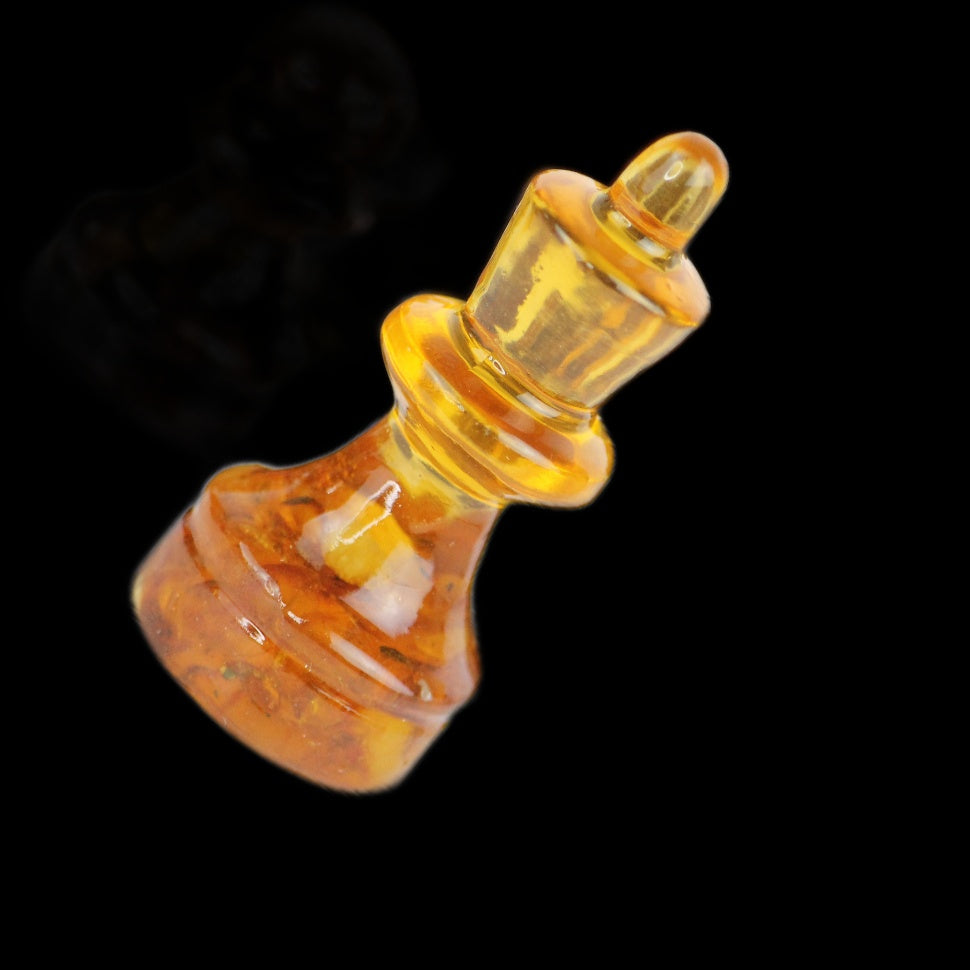

From Sketch to Stone: How a New KIZIMA® Design Is Born
Long before a piece of Baltic amber reaches the workbench in Brooklyn, it exists only as an idea. Every new design at KIZIMA® begins the same modest way — with a pencil, a sheet of paper, and a simple question: what shape will let this particular stone show its best self? It is a slower path than most jewelry and game-piece makers take today, but it is the only one that respects the material. The First Sketch Amber is not a material that bends easily to a designer's will the way clay or metal can. Each piece of rough stone carries its own color, clarity, and pattern of tiny natural inclusions. So a sketch at KIZIMA® rarely begins as a finished drawing — it begins as a set of possibilities. A designer studies the rough amber first, then works out several outlines that follow its natural shape rather than force it into one predetermined form. Testing Against the Stone Once a sketch feels promising, it is held up against the actual piece of amber. This step matters more than any drawing on paper. A curve that looks elegant in a sketchbook may waste too much of the stone, or fall right across a natural fracture that would weaken the finished piece. Adjustments happen here, sometimes through several rounds, until the design and the stone finally agree with each other. From Prototype to Production Only after a design has been tested against real amber does it become a working pattern for the workshop. The first finished piece is examined closely: does it sit comfortably, does the polish bring out the stone's natural warmth, does the setting hold securely. Small refinements are made before a design is considered ready to be repeated — always in small batches, and always cut and polished by hand in Brooklyn. Why It Takes This Long This unhurried path from sketch to finished stone is part of what keeps KIZIMA® the only Baltic amber manufacturer in America. Mass production would mean forcing the material into identical molds, discarding whatever amber didn't fit. Working the other way around — letting the stone guide the sketch — takes longer, but it is also why no two finished KIZIMA® pieces are ever perfectly alike. See where this process leads in our current collection at kizima.us.
Learn more
Amber Care Through the Seasons: Autumn Humidity and Storage
As summer humidity gives way to drier indoor heat, here's how to store and wear Baltic amber jewelry through the autumn months.
Learn more
Amber and the Change of Season: An Equinox Note
Today marks the autumnal equinox — the one day of the year when light and dark stand in nearly perfect balance. It's a quiet turning point, and it happens to be a season amber has always seemed made for. The stone carries the colors of this exact moment: warm honey, deep cognac, soft gold, the tones of leaves just starting to change. A Stone Formed by Seasons Baltic amber began as tree resin tens of millions of years ago, hardening slowly over time until it became the fossilized stone we work with today. Every piece carries that history in its color — the same warm spectrum we now associate with autumn, though amber wore these tones long before the season had a name. It's one of the reasons the stone feels so at home this time of year: the colors aren't a trend we're borrowing, they're simply what amber has always looked like. Balance, in Stone and in Season The equinox is a reminder that the year moves in cycles — light gives way to dark, warmth gives way to cool, and the wheel keeps turning. Amber has its own quiet relationship with time. A piece worn today might be passed down decades from now, still holding the same warmth it has always had. There's something grounding about wearing a material that has already outlasted so many seasons, especially on a day built around balance. Dressing for the Shift As wardrobes shift toward heavier knits and deeper layers, amber tends to shift right along with them. A honey-toned Baltic amber piece works as easily with a linen shirt in September as it will with wool in November — the stone doesn't so much match the season as carry it. Each piece in the KIZIMA® collection is cut and set by hand in our Brooklyn workshop from genuine Baltic amber, so the color you see is the stone's own, not a dye or a finish. An Everyday Piece for an In-Between Day The equinox doesn't call for anything elaborate — it's more of a pause than a celebration. A single honey amber choker, worn simply, feels right for a day about balance rather than excess. It's the kind of piece that moves easily from morning to evening, through whatever the season brings next. You can see the full range of amber jewelry, including our honey-toned pieces: shop amber necklaces or shop handmade amber jewelry — each one handmade in the USA from genuine Baltic amber.
Learn more
Small Batches: Why We Don't Mass-Produce Amber
Walk into our Brooklyn workshop on any given day and you won't find an assembly line. You'll find a handful of people, a sorting table covered in raw amber, and pieces that are each taking their own amount of time to become finished jewelry or a finished chess set. That's not a stylistic choice on our part — it's simply how genuine Baltic amber has to be worked if the result is going to hold up. The Material Sets the Pace, Not a Schedule Every piece of amber that arrives at KIZIMA® is different: different color, different clarity, different internal stress. A batch of a hundred raw pieces might yield very different amounts of finished stones, because some fracture during cutting, some reveal inclusions once polished, and some simply aren't right for the piece they were meant for. A factory optimized for volume treats that variation as a problem to engineer around. We treat it as the reason the material is worth working with in the first place. What “Small Batch” Actually Means Here In practice, it means a chess set's thirty-two pieces are matched by eye for tone and finish, not pulled from an undifferentiated bin. It means a choker like our Cube Baltic Amber Choker Necklace is shaped and polished one pendant at a time, so the geometry stays clean and the stone's natural pattern stays visible rather than sanded into uniformity. Small runs also mean we can set aside a piece that doesn't meet our standard without it being one of ten thousand identical units already committed to production. That decision costs us time. It's also the only way we know to keep quality consistent. The Trade-Off We Accept Mass production would mean shorter wait times and lower prices. It would also mean smoothing over the very irregularities that make Baltic amber what it is — a fossilized resin tens of millions of years old, not a manufactured material. We're a small manufacturer, not a factory, and we've stayed that way on purpose. It's part of why KIZIMA® remains the only Baltic amber manufacturer in America: the scale that lets us actually make things here, by hand, is the same scale that keeps each piece honest. You can see the results of that approach: shop handmade amber jewelry or visit our Brooklyn store — every piece made by hand in the USA from genuine Baltic amber.
Learn more
The Teutonic Knights Chess Set: A History in Gothic Amber
The KIZIMA® Teutonic Knights chess set — a Gothic silhouette hand-carved from solid Baltic amber in our Brooklyn workshop.
Learn more
The Time Behind One Piece: An Honest Look at the Process
How long does one KIZIMA® piece really take to make? An honest, behind-the-scenes look at sorting, carving, polishing, and the quality checks before a piece ships.
Learn more
The Amber Domino Set: Craftsmanship in Every Tile
Dominoes are one of the oldest tile games still played today, and at KIZIMA® we make ours the way the game deserves: cut, matched, and finished by hand from genuine Baltic amber. Each set starts as raw stone and ends as twenty-eight tiles that carry real weight, real color, and no two exactly alike. A Familiar Game in an Unfamiliar Material Most domino sets are wood, bone, or plastic. Ours are amber — fossilized tree resin between thirty and fifty million years old, sourced from the Baltic coast and worked in our Brooklyn studio. The material changes the game before a single tile is placed: amber carries natural inclusions, subtle color shifts, and a warmth to the touch that manufactured materials can't imitate. It's a small object with a long history behind it. Twenty-Eight Tiles, One at a Time Building a set means selecting pieces of amber close enough in tone to read as a set, then cutting, shaping, and polishing each tile individually. The pip markings are set into the stone rather than printed on it, so they hold up to handling for years. Because amber varies piece to piece, no two KIZIMA® domino sets come out quite the same — the honey, cognac, and amber tones shift slightly across the tiles, which is part of what makes a hand-assembled set different from a mass-produced one. Built for the Table, Not the Shelf We make our domino set for people who actually play — a family game night, a gift for someone who collects handmade objects, or a piece that simply looks right sitting on a desk between rounds. It's a game set first, but it's also a small display of what Baltic amber can be shaped into beyond jewelry, which is where most people first encounter it. The tiles are sized to sit comfortably in the hand, and the finished set comes ready for regular play rather than for a display case. As the only Baltic amber manufacturer in America, we handle every step of the process ourselves, from sorting the raw stone to the final polish, so a set like this never leaves the studio until it's ready. You can see the full domino set, along with the rest of our amber game collection: shop amber chess and games or shop amber home décor — hand-carved in our Brooklyn workshop.
Learn more
Setting Amber in Metal: Why the Mount Makes the Piece
An amber pendant is really two materials working together: the stone, and the metal that holds it. It's easy to focus on the amber itself — its color, its clarity, the way light moves through it — but the setting is what decides whether a piece survives daily wear, and whether the stone looks cared for or merely attached. The setting does more than decorate A bail or prong isn't just a frame around the amber; it's what carries the weight of the piece every time it's worn, clasped, or set down on a dresser. Amber is relatively soft as gemstones go, so the metal mount has to grip firmly enough to hold the stone securely through years of use, without clamping so tightly that it puts pressure on the amber itself. Getting that balance right is a large part of what separates a piece that lasts from one that doesn't. Fit is decided by hand Because natural amber varies slightly in shape and thickness from piece to piece, no two settings at KIZIMA® are adjusted in quite the same way. Each mount is fitted to its specific stone in our Brooklyn workshop, checked for a secure seat, and finished so the metal reads as part of the design rather than hardware bolted onto it. It's a slower way to work than stamping out identical settings for every stone, but it's the only way to get a proper fit on a material this individual — and it's one more reason mass production and genuine amber don't mix easily. What a good setting protects against A well-fitted mount does quiet, unglamorous work. It keeps the amber from shifting inside its frame, which over time is what causes stones to loosen or fall out. It also covers and smooths any edges that would otherwise catch on clothing, hair, or a scarf — small points of friction that, repeated daily, are enough to crack a stone eventually. None of this shows up in a photograph, but it's the difference a wearer feels a year or five years in. Why the mount decides the piece's future A well-fitted setting is also what makes an amber piece something you can hand down. Loose settings work stones free over time; poorly finished edges shorten a piece's working life no matter how fine the amber inside it is. A mount that's been fitted properly protects the stone from exactly the kind of everyday wear that would otherwise wear it down — which is really the quiet job of good metalwork: doing its part so the amber can do the rest. See the full collection of handmade Baltic amber jewelry: shop handmade amber jewelry or shop amber pendants — every setting fitted by hand in our Brooklyn workshop.
Learn more
Amber That Outlasts Decades: A Stone Worth Passing Down
Some jewelry is worn for a season. Baltic amber tends to be worn for a lifetime — and then handed down to someone else's. On Grandparents Day, that quality feels worth pausing on: amber is fossilized tree resin, thirty to fifty million years old by the time it reaches a workbench in Brooklyn, and a well-made piece of it can easily outlast the person who first wore it. A stone that was already old By the time Baltic amber becomes a pendant or a choker, it has already survived longer than any human timeline can account for. Unlike many gemstones, it doesn't need to be "kept nice" to hold up — it's simply stable. A piece worn daily for twenty or thirty years shows the same warm, honeyed depth it had on day one, which is part of why amber jewelry so often becomes a keepsake rather than a trend. Why it becomes a family piece At KIZIMA®, every piece is handmade in our Brooklyn workshop from genuine Baltic amber, set to be worn rather than stored away. That everyday durability is exactly what makes amber suited to being passed down — a grandmother's amber necklace can become a granddaughter's, still intact, still warm in tone, without restoration or repair. It's a quieter kind of heirloom: not fragile, not precious in the sense of needing protection, just quietly permanent. Choosing a piece meant to last The Acorn Baltic Amber Choker Necklace is a good example of that idea in practice — a simple, natural form in genuine amber, the kind of piece that doesn't date itself to one particular year or trend. It's the sort of jewelry that looks as much at home today as it will in twenty years, which is really the point of an heirloom: something that doesn't ask to be updated. A small thing, held onto Grandparents Day isn't really about jewelry, of course — it's about the people who've stuck around long enough to matter. But if there's a gift in the idea of amber, it's this: a piece that's already outlived millions of years doesn't mind being worn for a few more decades, by whoever it's given to next. See the full amber jewelry collection, handmade in Brooklyn: shop amber necklaces or shop gifts for her — a stone worth passing down.
Learn more