



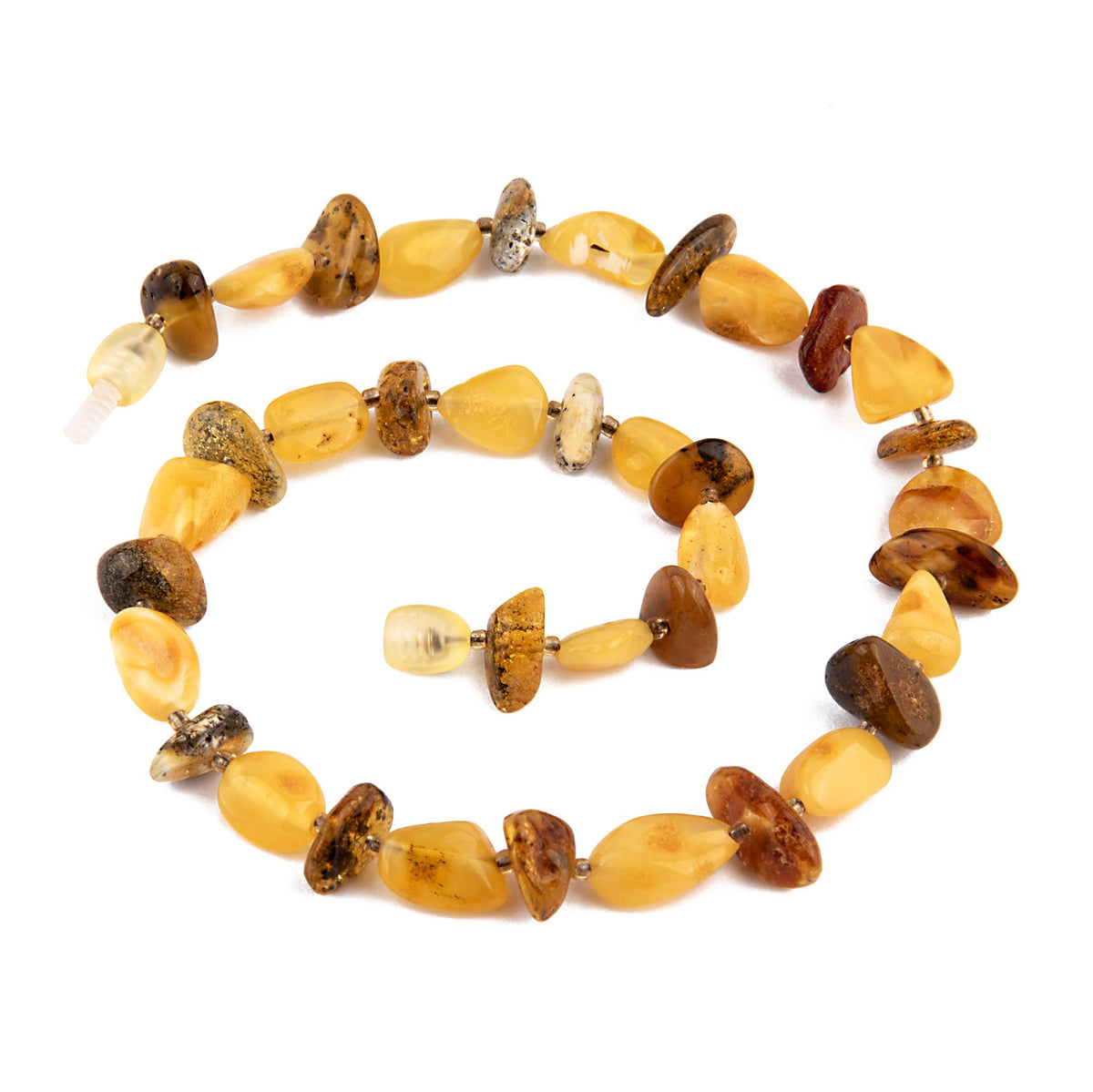
"Ethical sourcing" gets used loosely in jewelry marketing, and amber's story is different enough from mined gems that it's worth explaining plainly rather than just claiming the label.
How Baltic amber is actually gathered
Most Baltic amber comes from open-pit extraction in the Kaliningrad region, along with amber that washes ashore naturally after storms — a much lower-impact process than deep mining used for many other gems, with no ongoing extraction of a non-renewable mineral body the way diamond or gold mining works.
Where we buy from
We source raw amber through established Baltic suppliers with documented origin, rather than unverified bulk lots — it's slower and costs more, but it's the only way we can honestly tell a customer where their stone came from.
What we can't claim
We won't call amber "sustainable" in the sense of renewable — it's a finite fossil resource, tens of millions of years old, and every piece sold is one fewer piece in the ground. We'd rather say that plainly than oversell it.
Read more about our sourcing — and see the pieces it produces: shop handmade amber jewelry or shop amber bracelets.


