



The Amber Book — Chapter 23
Amber and music have always kept company. Rosin — the block every violinist rubs on the bow — is amber's younger cousin, pine resin one step from becoming stone. Without resin, a bow slides silently across the strings; with it, the violin sings. So when we carve violins and pianos from amber, we are only reuniting the family.
The luthier's secret cousin
String players have known resin's magic for centuries: colophony rosin gives the bow its grip, and old luthiers ground amber into legendary varnishes for the instruments themselves. The material of music, in the most literal sense, is the material of amber — which makes an amber violin not just a pretty object but a kind of pun in matter: the song, carved in the substance that makes song possible.
The KIZIMA® orchestra
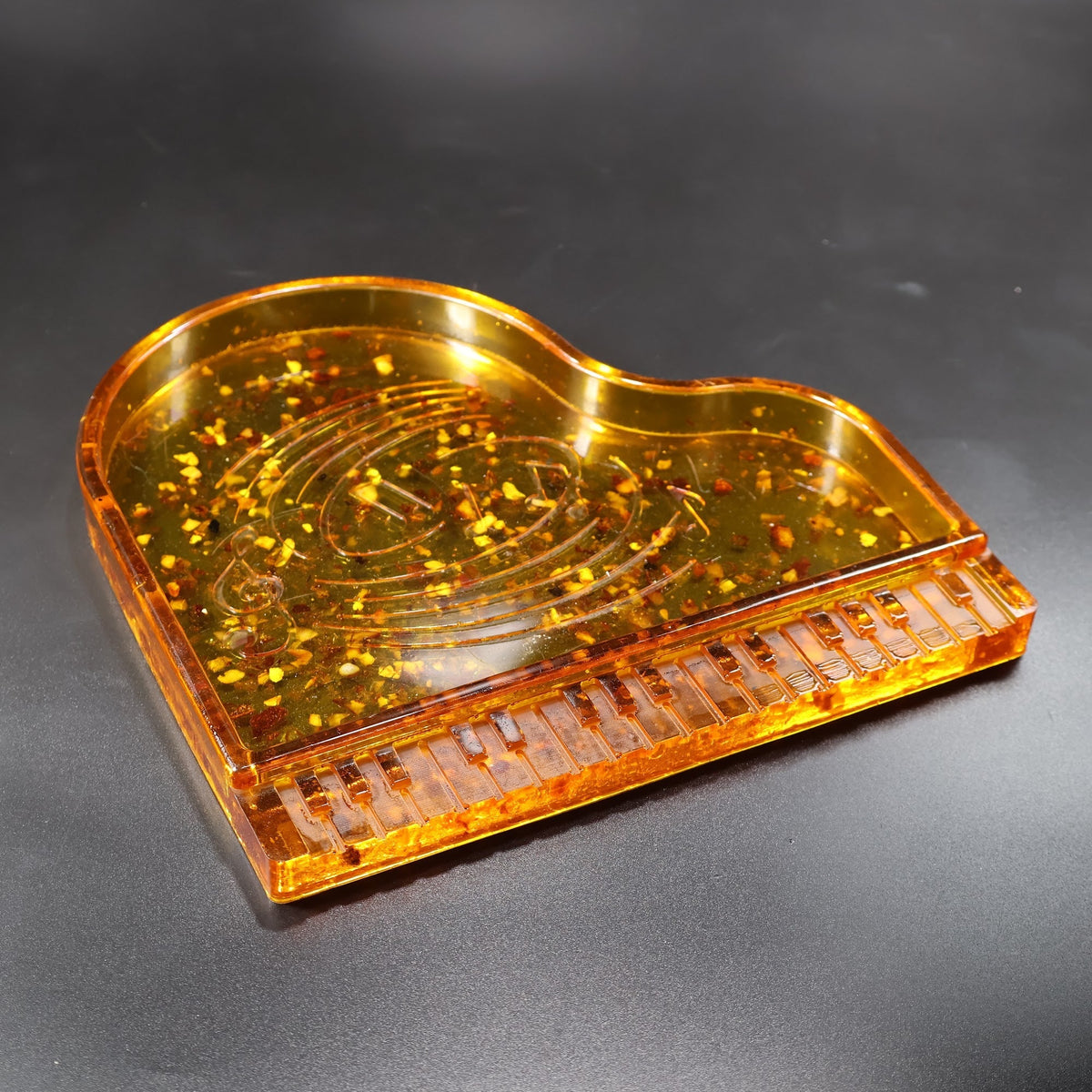
Our Brooklyn workshop carves a full ensemble in genuine Baltic amber: grand pianos — including a jewelry box whose lid lifts like the lid of a concert Steinway; upright pianos, violins with delicate scrolls and f-holes, guitars from figurine to brooch, and the treble clef — music's own signature — as pendants and pins. Each is a portrait of an instrument in honey and cognac, glowing as if it had absorbed every note ever played near it.
The gift for a musician
Musicians are famously hard to gift — they already own the instrument they love. The amber miniature solves it: a piano for the piano teacher's desk, a violin for the concertmaster's shelf, a treble clef for the singer, a guitar brooch for the band's lapel. It says I know who you are — recital gifts, graduation gifts, retirement gifts for the choir director who gave forty years. The amber orchestra plays every occasion.
Frozen music
Goethe called architecture "frozen music." He never held an amber violin — frozen sunlight, carved into frozen song. We suspect he would have revised the quote.
Next chapter: amber for the home — warm light for modern interiors.
Discover our amber musical sculptures and music-inspired amber jewelry handcrafted in Brooklyn.


