



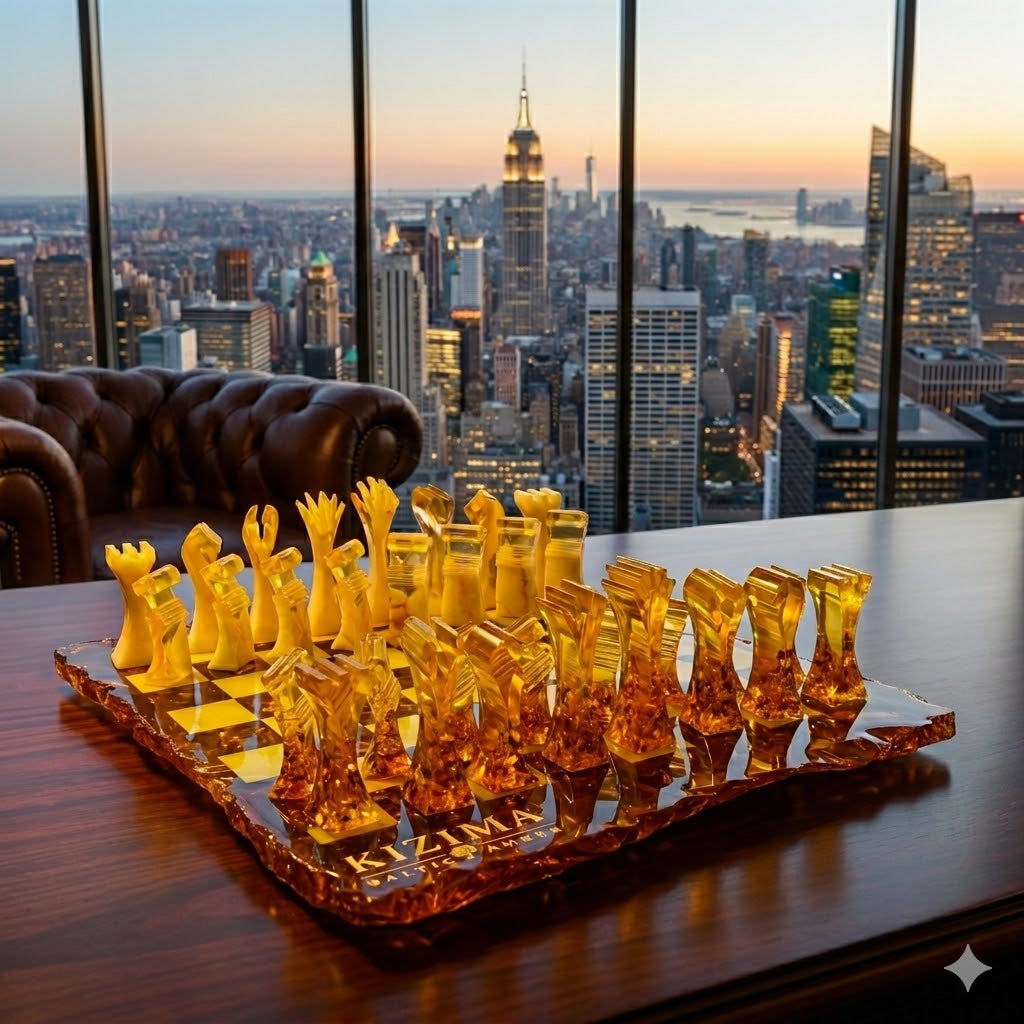
In the great museums of the world, amber occupies a strange and wonderful place: too precious to be merely craft, too alive to be merely stone. And nowhere is that more visible than in one object — the amber chess board.
The guilds of Königsberg
From the Middle Ages onward, the city of Königsberg on the Baltic coast held a near-monopoly on the world's amber. The Amber Guild, founded in the 16th century, controlled every stage of the craft — from the fishermen who netted "sea stone" after storms to the master carvers whose workshops supplied the courts of Europe. Guild masters spent years as apprentices before they were permitted to touch the finest material. Their masterworks — caskets, altarpieces, tankards, and game boards — became diplomatic gifts exchanged between kings.
A chessboard fit for the Metropolitan
One of those masterworks survives today in New York. The Metropolitan Museum of Art holds in its permanent collection a 17th-century amber chess and game board from Königsberg — a virtuoso object of translucent honey and opaque white amber panels over gilded foil, made when amber was worth more than gold by weight. Standing before it, you see exactly why contemporaries called amber "the tears of the sun."
The tradition crosses the ocean
Königsberg's guilds are gone, but the lineage is not. KIZIMA® was founded by a master born in Königsberg (today's Kaliningrad) — and today, in our Brooklyn workshop, we make amber chess sets the way the guilds did: by hand, one piece at a time, from genuine Baltic amber. We are the only Baltic amber manufacturer in the United States.
Our KÖNIGSBERG IMPERIAL line and the Arthurian-inspired Camelot collection are direct descendants of that guild tradition: sculpted kings and knights in honey and cherry amber, boards that glow like stained glass when the light passes through. Each set is made to order — because that, too, is how the guilds worked.
An heirloom, not a souvenir
A handcrafted amber chess set is one of the few objects that belongs equally on a collector's shelf and in daily use. It appreciates the way all true craft does: through touch, time, and the stories played across it. Three hundred years from now, someone may stand before one of these boards the way we stand before the one at the Met.
Explore the chess collection at kizima.us — handcrafted in Brooklyn, rooted in Königsberg.


