



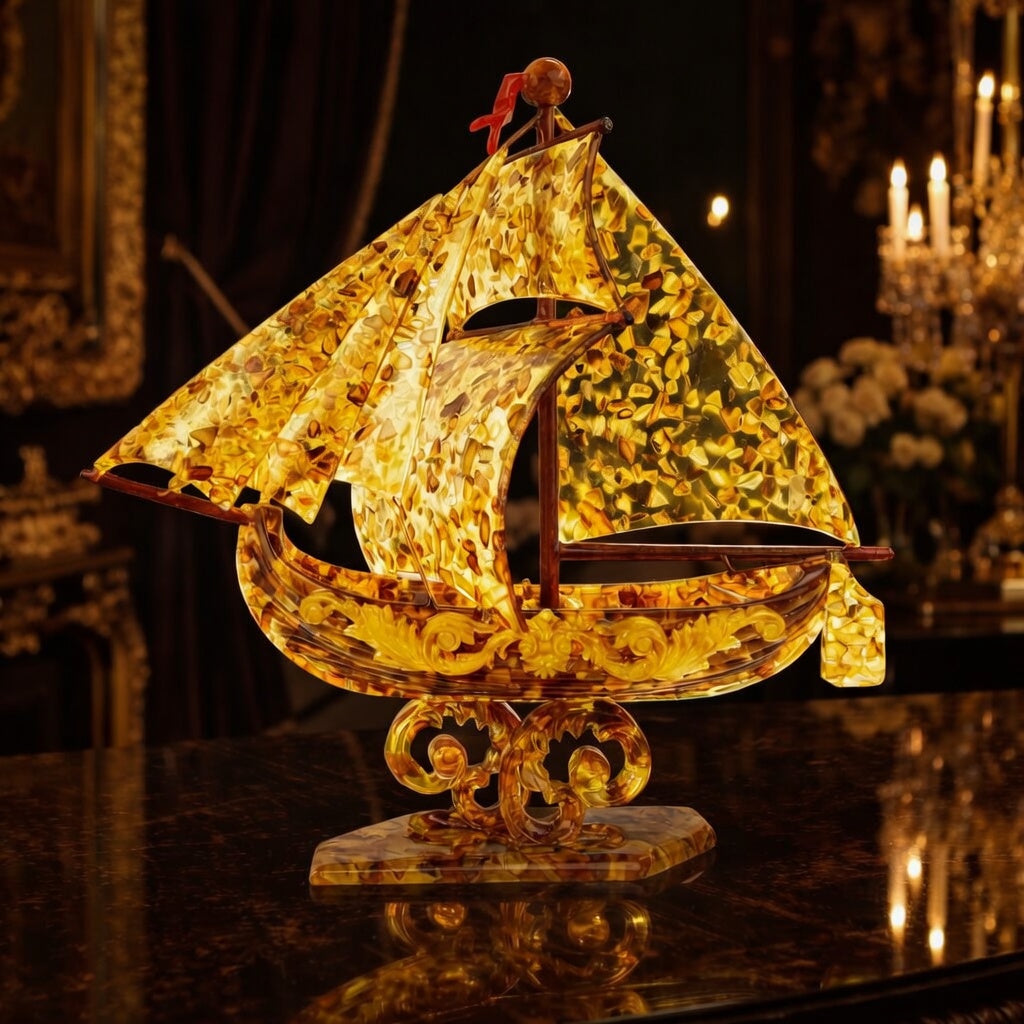
Here's a fact that surprises most first-time buyers: amber floats in saltwater. It's light enough — lighter than almost any other gem material — that storms have washed it ashore along the Baltic coast for as long as people have been collecting it.
A sailor's stone
Baltic sailors carried small amber pieces for luck long before it was fashion jewelry, and amber trinkets show up in maritime folk traditions from Gdańsk to Königsberg. A stone that could wash up after a storm and be found glowing on a beach earned a certain mythology.
"Sea stone" as a grading term
Amber gathered directly from the sea or shoreline — rather than mined — is still sometimes called "sea amber" or "sea stone," prized for being naturally weathered and shaped by water rather than cut from a raw block.
A property you can test at home
It's also a real authenticity test: genuine amber floats in a strong saltwater solution, while most amber imitations (glass, plastic, many resins) sink. Not foolproof, but a fun fact worth knowing before you buy.
Explore amber with real Baltic provenance: shop handmade amber jewelry or shop amber home décor.


