



The Amber Book — Chapter 11
Before amber was jewelry, it was protection. Across the ancient North — from Stone Age settlements to Viking harbors — people carried amber not to be beautiful, but to be safe. This chapter is about that older amber: the amulet.
The first amulets
Archaeologists have found carved amber amulets in Baltic settlements many thousands of years old — among the oldest figurative art of northern Europe: little bears, elk, waterfowl, discs marked with sun-crosses. Amber accompanied people into graves, guarded children's cradles, and hung at the doorposts of homes. The logic of the ancients was beautifully direct: a stone that is warm, that glows like the sun, that crackles with invisible force when rubbed — what could be better armor against the cold and the dark?
Amber and the runes
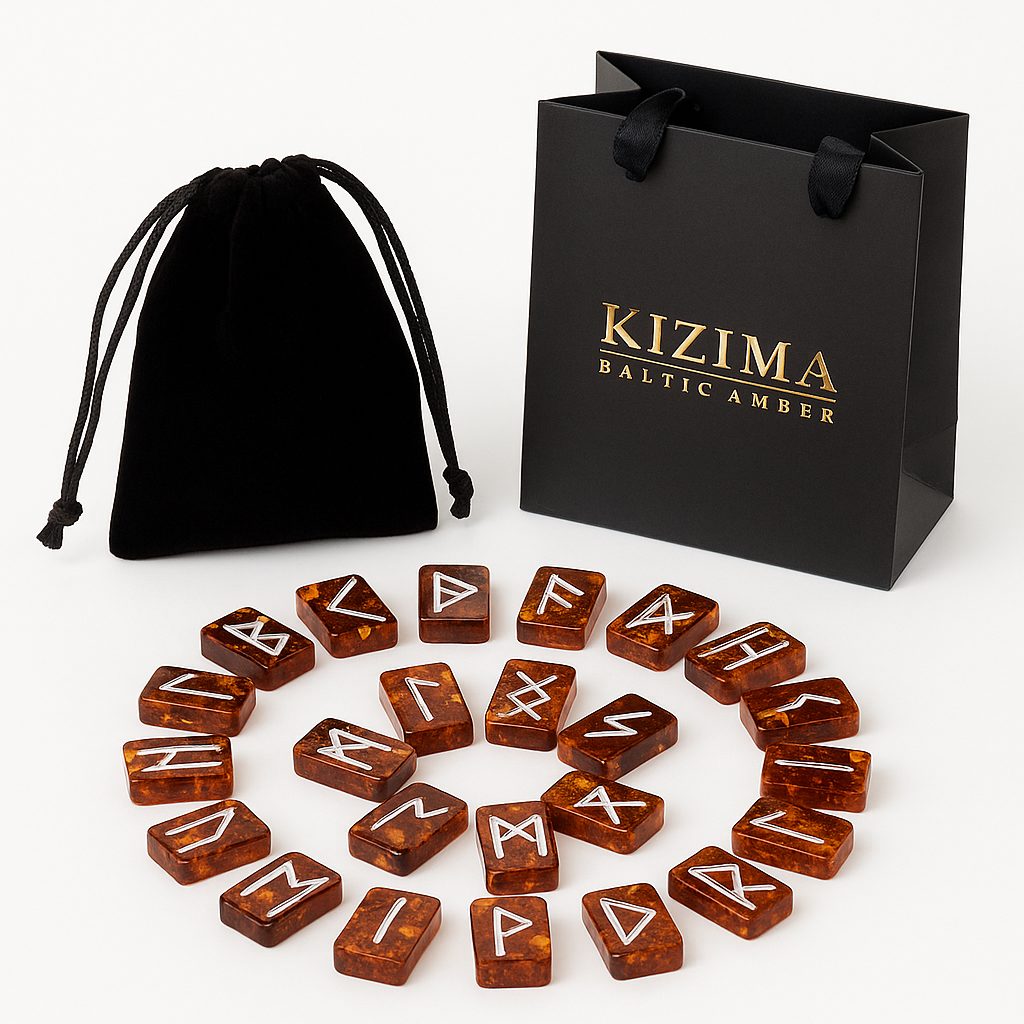
When the runic alphabet spread through the northern world, its signs were more than letters — each rune carried a meaning: Fehu for wealth, Algiz for protection, Sowilo for the sun itself. Rune-casting — drawing marked pieces to ponder a question — became one of the North's oldest traditions of reflection. And of all materials for a rune set, amber was held highest: sun-signs deserve a sun-stone. A full set of runes carved in glowing Baltic amber was a treasured possession, passed down like the family's memory.
Symbols people still choose
These meanings never quite died; they folded quietly into modern life. In tradition, amber symbols speak like this:
- The sun-disc and spiral — life, renewal, the return of light.
- Animals — each a virtue: the bear for strength, the owl for wisdom, the elephant for good fortune and family.
- The teardrop — Jūratė's tears; love that endures.
- Runes — a question asked of oneself, and an heirloom in the making.
(We tell these traditions as the folklore they are — the meaning an amulet carries is the meaning its owner gives it. That has always been the real magic.)
Carved the old way
At KIZIMA® we handcraft complete amber rune sets and amulet figurines in Brooklyn, each piece cut and polished individually — because an object meant to feel ancient should be made the ancient way: by a single pair of hands.
Next chapter: amber in faith — rosaries, icons, and prayer beads.
Discover amber amulets and rune jewelry and protective amber figurines handcrafted in Brooklyn.


