

The Amber Book — Chapter 5
Amber exists all over the world — the Dominican Republic, Mexico, Myanmar, Lebanon, even New Jersey. So why, for three thousand years, has one amber been the measure of all others? Why does "Baltic" mean, to collectors and jewelers alike, simply the real thing?
The signature of succinite
Baltic amber has a chemical autograph no other amber carries: succinic acid, from 3 to 8 percent of its mass. Science named the material after it — succinite — and laboratories worldwide use infrared spectroscopy to identify Baltic amber by this signature alone. When a gemologist certifies "genuine Baltic amber," that certificate rests on chemistry as distinctive as a fingerprint.
Age and hardness
At roughly 40–44 million years old, Baltic amber is far more mature than most ambers on the market. Dominican and Mexican ambers are typically 15–25 million years old; much of what is sold from younger sources is technically copal — resin that never finished fossilizing. Age matters practically: mature amber is harder, more stable, polishes to a deeper luster, and survives carving that would shatter young resin. This is why serious amber sculpture — chess pieces, figurines, icons — has always been Baltic.
The largest treasury on Earth
The Baltic deposits are the greatest concentration of amber in the world — by most estimates, the vast majority of all amber ever found came from the shores of this one sea. That abundance built the Amber Road, funded the guilds of Königsberg, filled the Amber Room, and made this material part of European civilization in a way no other gem region can claim.
The palette
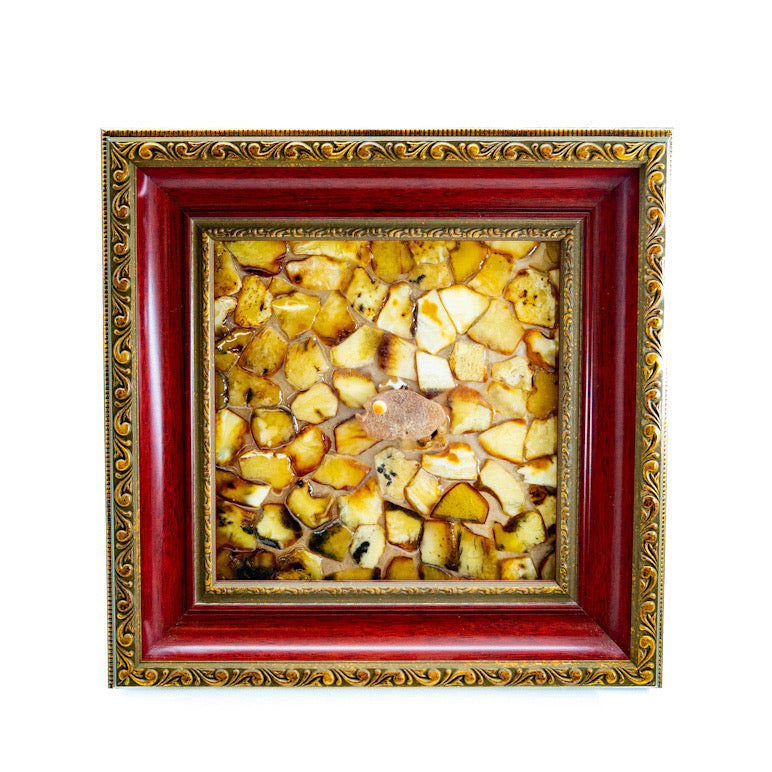
No other amber offers the Baltic range: transparent honey and cognac, opaque butterscotch, cherry, and the rare royal white — dozens of recognized shades in one deposit. A craftsman working Baltic amber holds an entire palette in one material.
Our standard
At KIZIMA® we work exclusively with genuine Baltic amber — succinite — in our Brooklyn workshop. Not because other ambers are unworthy, but because our story runs through Königsberg, the historic capital of this very stone, and because when we say "amber," we intend the word in its oldest, fullest sense.
Next chapter: the Amber Road — how frozen sunlight built one of the great trade routes of antiquity.
Shop genuine Baltic amber jewelry — succinite, the gold standard — handcrafted in Brooklyn.


