



The Amber Book — Chapter 3
Most gems are torn from the earth. Amber is the only one the sea brings to you — if you know when to look.
The blue earth beneath the waves
The great amber deposits of the Baltic lie in a layer geologists call the "blue earth" — glauconite sands, rich in amber, resting beneath the seabed and along the coast. For most of history no one dug for it. The sea did the work: storms tore into the blue earth, ripped amber free, and — because amber is barely denser than seawater — carried it ashore tangled in ribbons of seaweed.
Storm harvest
For centuries, the morning after a great autumn storm was harvest day on the Baltic coast. Whole villages waded into the freezing surf with nets on long poles — amber-fishers scooping seaweed and sifting out the glowing stones. They called it sea stone. Larger pieces were treasure: a single storm in 1862 famously threw two tons of amber onto one beach. Even today, after a good storm, beachcombers from Gdańsk to the Curonian Spit walk the tideline at dawn, and the sea still pays the patient ones.
How to spot amber on a beach
- Look in the seaweed lines left by the retreating tide, not on clean sand.
- Go at dawn after an onshore storm, in cold months — cold water carries amber better.
- Amber among wet pebbles looks dull; it glows only when the light passes through. Pick up anything honey-toned and hold it to the sun.
- It feels warm and light — a pebble of the same size feels cold and heavy.
From sea stone to heirloom
Every piece of genuine Baltic amber in a KIZIMA® work — every chess pawn, every bead, every carved owl — began this journey in the blue earth and passed, one way or another, through the hands of the sea. We finish in Brooklyn what the Baltic started forty-four million years ago. There is no other jewel with a supply chain like that: forest, sea, storm, hand.
Next chapter: the tests that separate genuine Baltic amber from imitations — and why they matter.
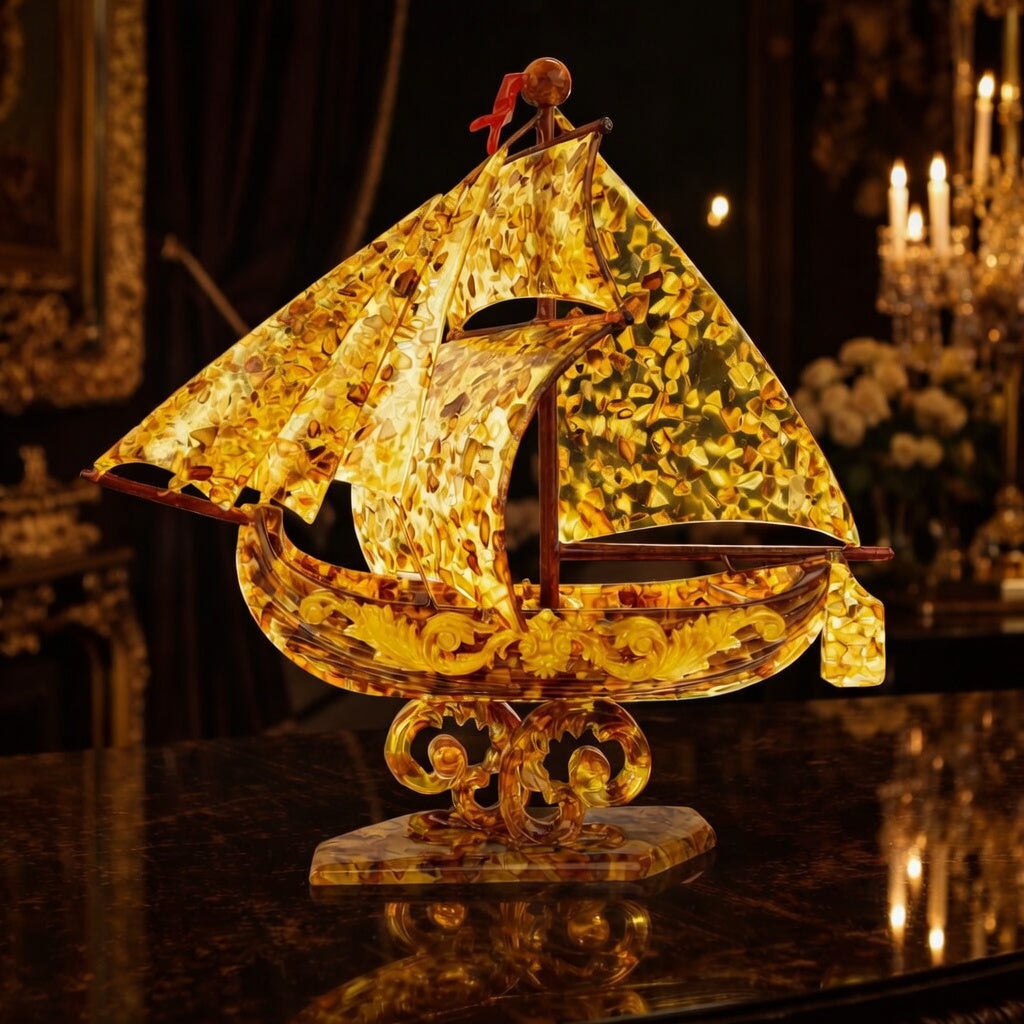
Bring the sea's gift home with genuine Baltic amber jewelry and handcrafted amber sailboats — from sea stone to heirloom.


